If you have been reading earlier post, you figured that this year I am a senior. Instead of finishing school traditionally in high school, I decided to take advantage of the dual enrollment and registered at a local university full-time. That’s the reason I did not post anything for a while. My next food science project was pickling. I wanted to attempt to preserve/pickle some simple vegetables for flavor and health reasons. Plus, my mom is a huge fan of anything pickled. Figuring out university schedules, new online platform and professors took some time. So, pickling was put on a back burner until my dad and I decided to take some food out from Montana Grill. Have you ever been there? Have you ever tried pickled cucumbers? This is a type of a free appetizer that they offer before food arrives. Like bread rolls at the Italian restaurants. My taste buds exploded when the first pickle went in. Right then and there I put my university projects aside and focused on what I really enjoy – food science. I knew right away that these pickles were not your typical overly processed and packed with artificial preservatives snack. These were homemade, lightly salted pickles that I absolutely had to replicate.
First, I started with a phone call to my grandmother in Ukraine who somehow keeps ALL of her recipes by memory. When it comes to food, she has all of her search engines in her brain. I hope when I will be 88 years old, my grandchildren will be calling me for recipes. It took her less than 30 seconds to give me a complete list for grocery shopping. Pickling is a budget friendly experiment. The only thing you need to do is to invest your time into finding some good quality, firm cucumbers. You might go for Persian or European ones. You will also need lots of fresh dill, garlic, and a brine solution of water and salt. Additionally, I added some whole black peppercorns and bay leaves for extra flavor. My mom already had some classic jars for canning. Any in two days I had my own deliciously crunchy, mind numbing (in a good sense), lightly salted pickles.
If you decide to take on this pickling adventure, please know that it requires no culinary skills. The only trick is to find canning and pickling salt. Depending on an area where you live it may or may not be readily available. The only difference between pickling and regular salt that it is a fine-grained, pure salt without iodine or anti-caking agents. Pickling salt ensures a clear brine and consistent results for preserving foods. While you can use kosher, it must be substituted by weight or volume to maintain the correct salt concentration, which is crucial for safety and quality. If your mouth is not watering yet, just look at the images below if the final product.

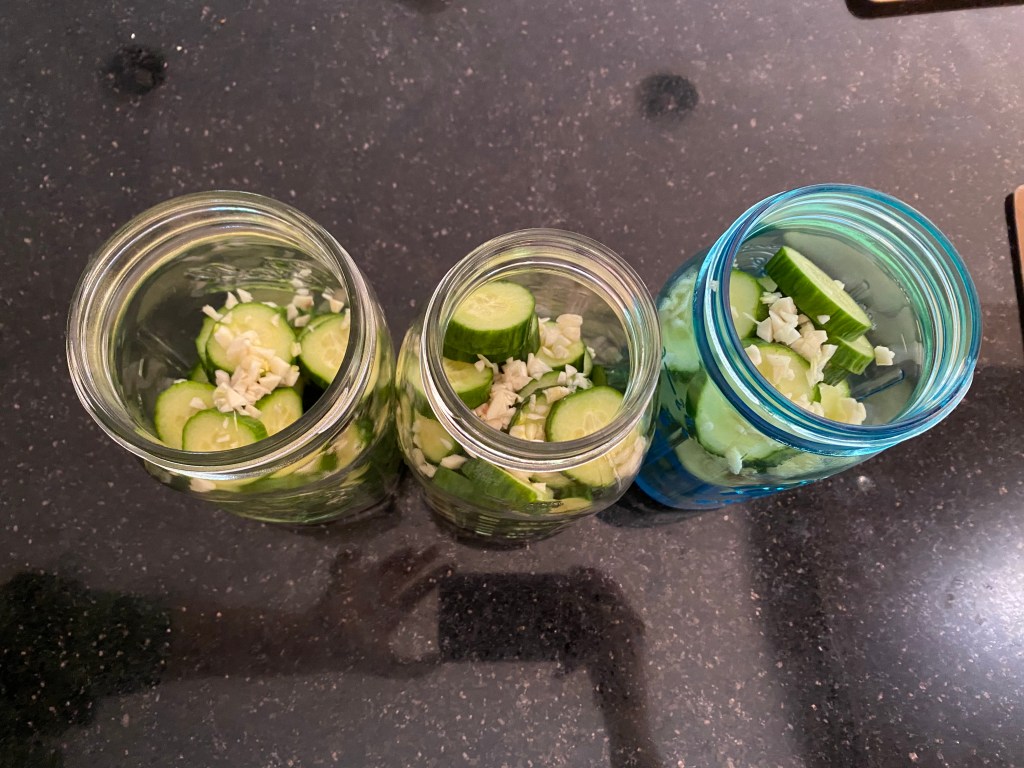
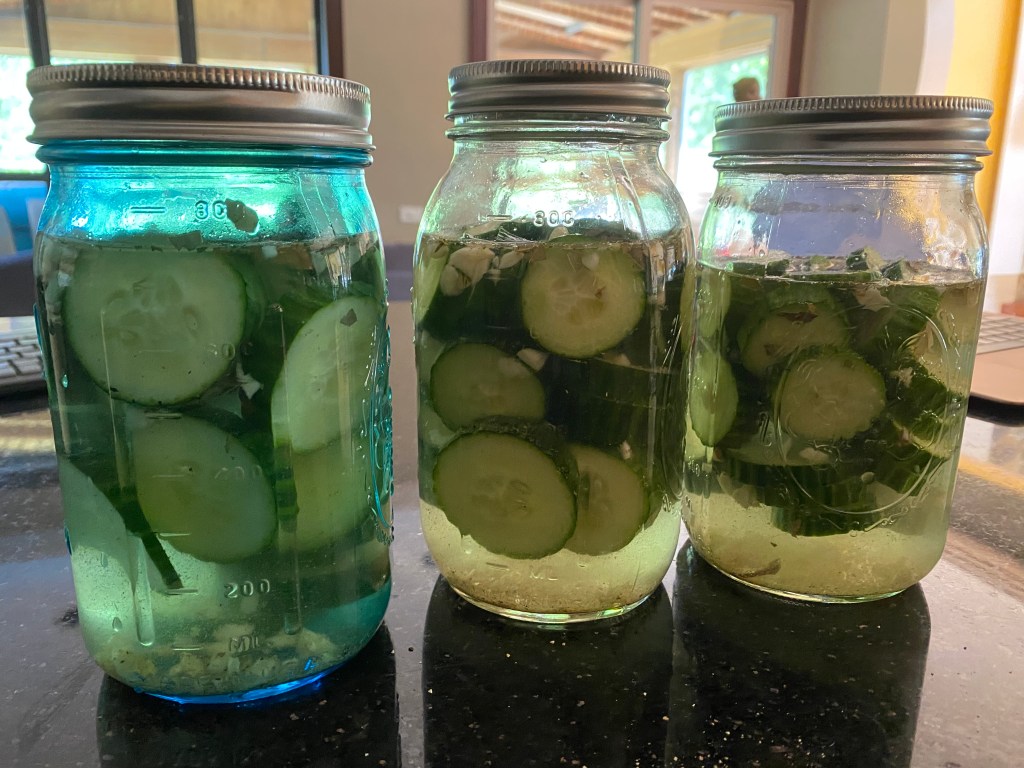
I know that you will be running to the store to get your set of ingredients before you finish reading this post. Enjoy the crunch!
 Fermination
Leave a comment