Crunch, Crunch! Slurp, slurp! Do you like your kimchi crunchy or aged? Do you even like kimchi? Have your tried kimchi? If you have not, like most of my friends, please get your nostrils and taste buds ready for a pungent smell and delicious (in my opinion) taste. My dad aways knows if I am fermenting some kimchi or making a kimchi soup just by the smell. Nothing beats a bowl of kimchi soup on a winter day!!!

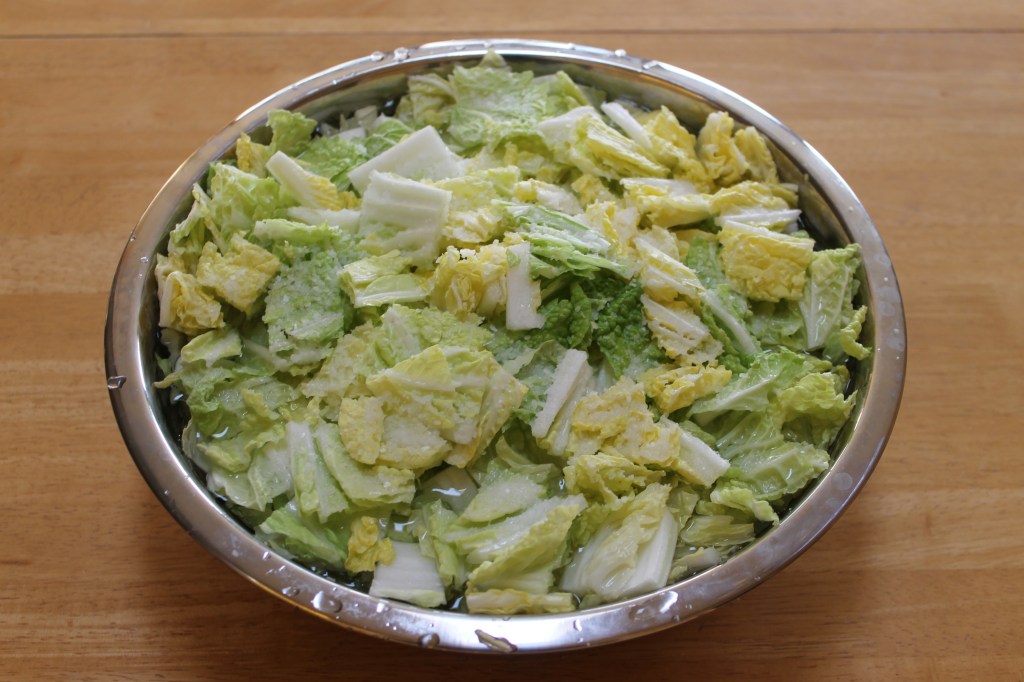
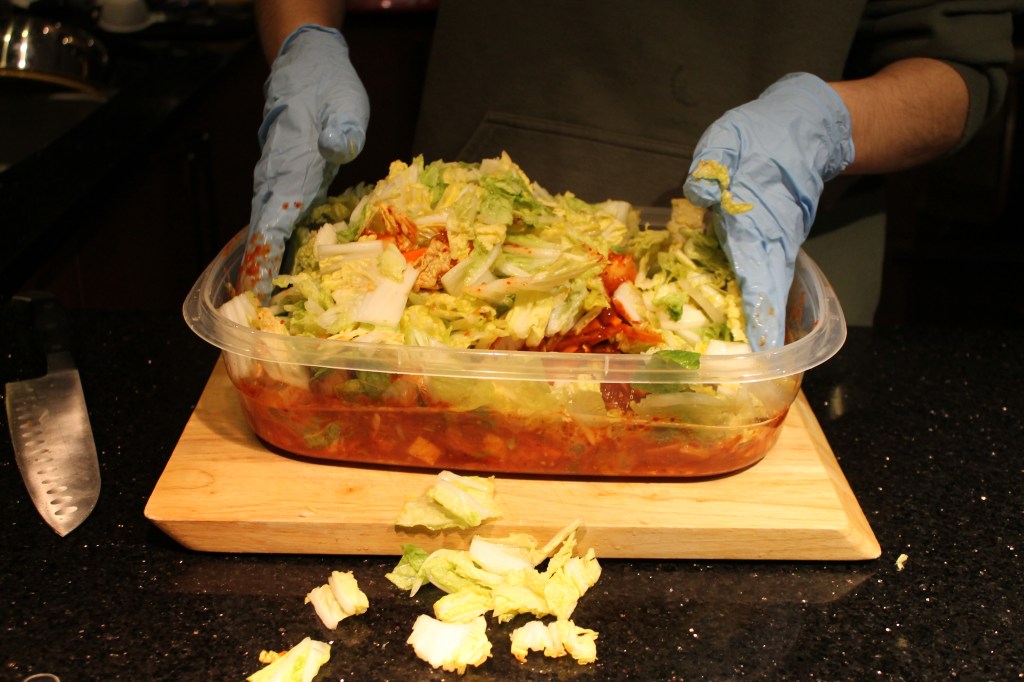
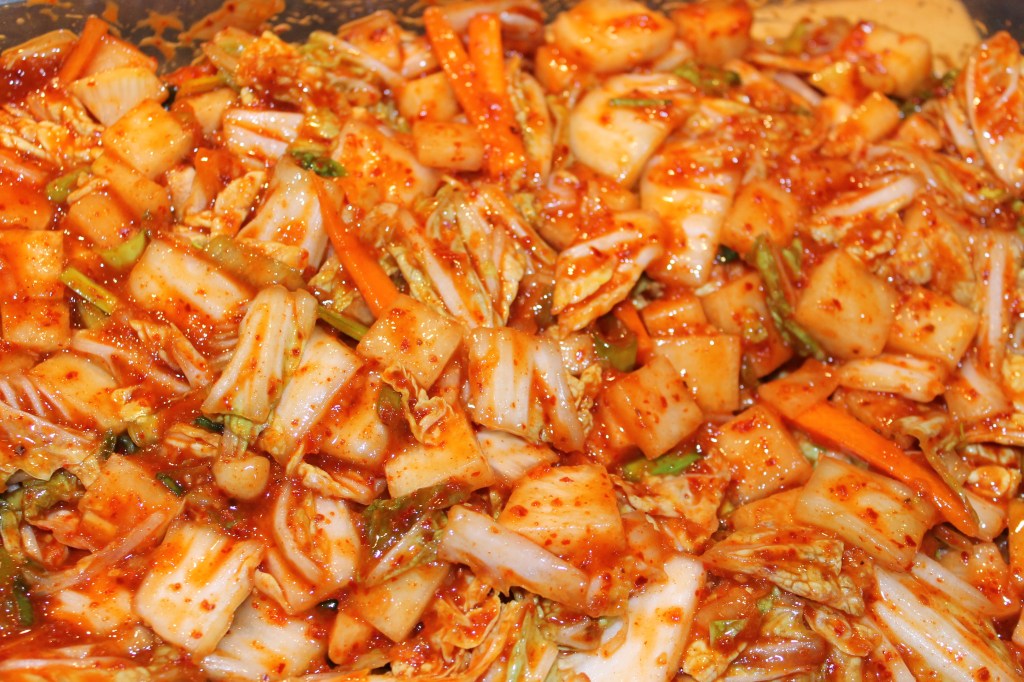
There are numerous articles about health benefits of this relatively cheap side dish and gazillion recipes on-line. By now I have tried several store bought kimchi products but nothing beats making it homemade. I want to give you heads up that it does take a few rounds to find a perfect balance of saltiness, bite size, and spiciness that will work for you. Please hear me out! Kimchi isn’t just a spicy side dish – it’s a whole-body tune-up. The process of fermentation turns cabbage into a living community of lactic-acid bacteria – Lactobacillus species, Leuconostoc, Weissella – that colonize your gut, crowd out pathogens and help you digest food more smoothly. A happier microbiome means fewer bloat days and fewer “uh-oh” moments after a big meal. If you are not a rule follower, feel free to experiment. You can toss in pretty much any vegetable of your choice. But if you settle on a traditional baechu kimchi (napa‐cabbage–based), please note that one cup is packed with 2 grams of fiber, plus vitamins A, B6 and C, along with minerals like iron and calcium. Since fermentation makes vitamins more bioavailable. Meaning that it allows you to absorb more than you would from fresh cabbage alone.
I can’t not mention natural anti-inflammatory & antioxidant chili peppers.
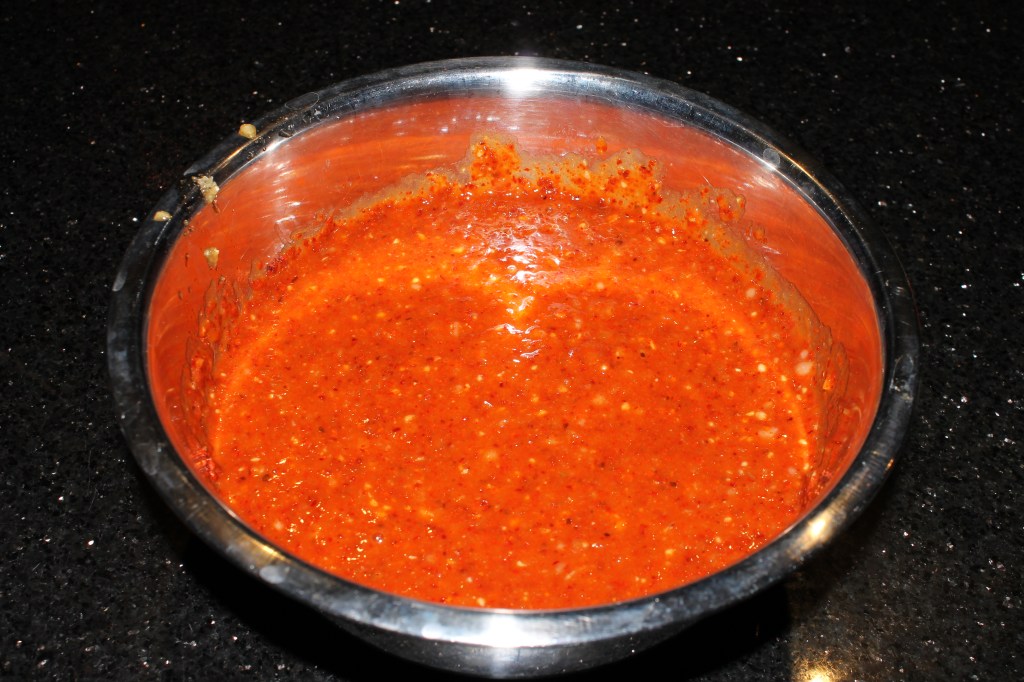
These days you can find at least one kind at your regular grocery store at the international aisle. Chili peppers bring capsaicin; cabbage provides flavonoids and glucosinolates. Together, they tamp down chronic inflammation (linked to everything from arthritis to heart disease) and mop up damaging free radicals.
If any of your relative are fighting high LDL cholesterol and blood pressure (like my dad), studies show that daily lovers of kimchi can help lower the numbers. Most likely thanks to the fiber, plant sterols and fermentation by-products that modulate lipid metabolism.
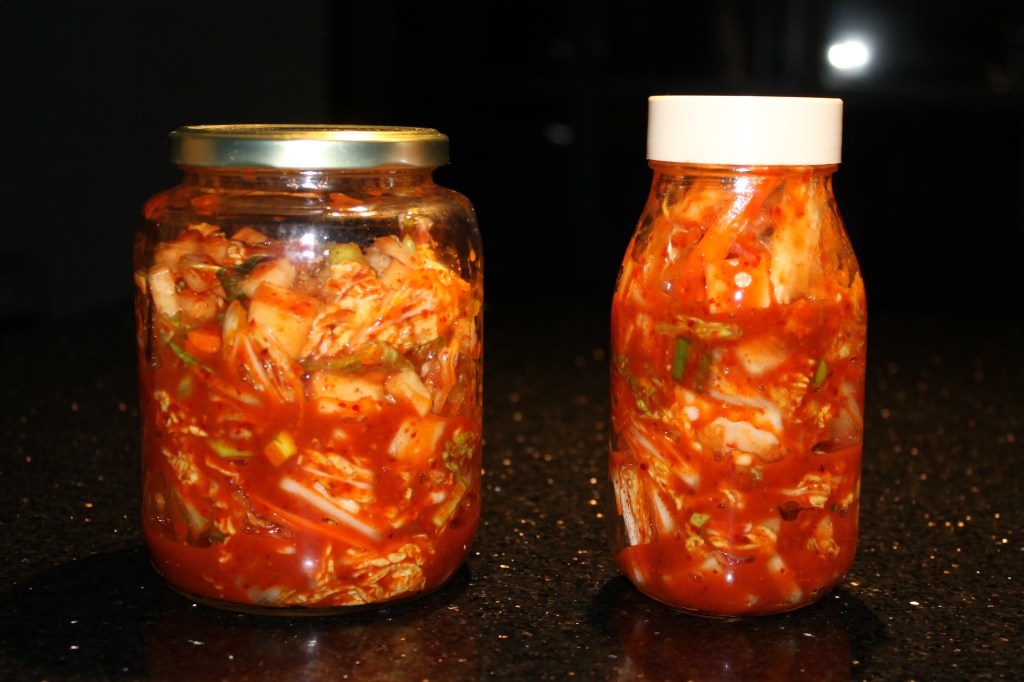
Some say that daily consumption of kimchi helps with weight support as it is low in calories but high in fiber. Kimchi is loaded with probiotics that can influence how your body stores fat. I often feel that it helps me to feel full longer. But maybe it is just me as I love to stir it into fried rice or grain bowls. Sometimes I top avocado toast for a tangy twist or blend into a quick, funky vinaigrette for salads. Hands down, kimchi soup is my all-time favorite.
Beyond perks for the body, personally for me, kimchi is a creative outlet. I love to experiment with radishes, cucumbers, turnips, and even green beans! I hope I have convinced you and next time when someone offers you a bowl of kimchi, you will say – Yes, please!
 Fermination
Leave a comment